Best Kayak Carts for Sand
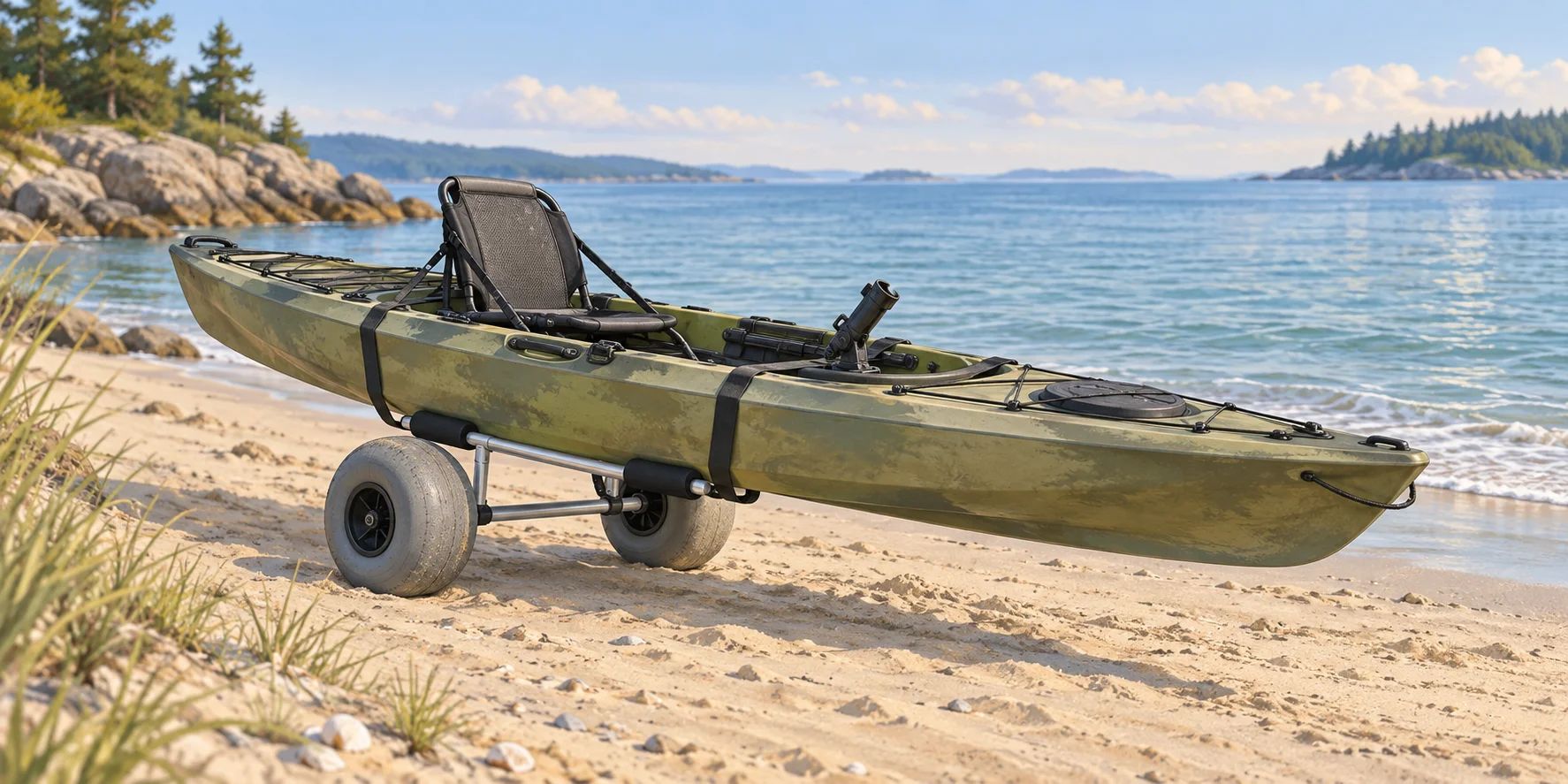
A beach launch can look wonderfully simple until you start thinking about getting the kayak across it. The walk might include a paved parking lot, a narrow path and a stretch of loose sand before you reach the water. Your cart has to suit that whole trip.
For soft sand, start by looking at carts with balloon-style beach wheels. Then narrow the choice by your kayak’s loaded weight, the shape of its hull and where you’ll put the cart once you launch. A puncture-free alternative may appeal, too, but its load rating and fit limits deserve a close look.
These three options give you different places to start, with a few important catches to check before buying.
Which sand cart should you consider?
- For a heavier fishing kayak: consider the Wilderness Systems Heavy-Duty with Beach Wheels, provided its adjustable supports fit your hull.
- For adjustable support that can run in either direction: look at the Suspenz Catch-All Beach, but resolve its conflicting load ratings before relying on it for your rig.
- For an airless option: consider the C-Tug R with SandTrakz, subject to its hull restrictions, static rating and availability.
Compare the configurations
| Cart | Wheels | Manufacturer load information | Cart weight | Main limitation |
|---|---|---|---|---|
| Wilderness Heavy-Duty Beach, 8070167 | 13-inch balloon-style | 330 lb, kayak and gear during transport | 18.77 lb | Check hull support; the beach version has its own rating |
| Suspenz Catch-All Beach, 22-9910 | Nominal 13 × 7-inch beach wheels; size wording varies | Conflicting: current page 240 lb; linked manual 300 lb | 14 lb | Confirm the applicable rating before purchase |
| C-Tug R SandTrakz, 50-0014-71 | Puncture-free, compressible SandTrakz | 80 kg static, approximately 176 lb; not a sand-transport rating | 10 lb | Specific hull exclusions; US manufacturer listing out of stock when checked |
Changing the wheels can change the cart’s rating. Match the model and wheel configuration in the listing to the one you intend to buy.
Wilderness Systems Heavy-Duty with Beach Wheels
Why consider it: A stated transport rating for a loaded fishing kayak, with adjustable bunk supports.
Main tradeoff: At 18.77 lb, it is the heaviest cart in this comparison.
The Wilderness beach configuration is a sensible starting point if you carry a heavier rig across sand. Its support bars adjust in width, and two height settings give you another way to accommodate the hull.
Look for SKU 8070167. The familiar Wilderness cart with no-flat wheels is a different configuration; its rating should not be carried over to this beach version.
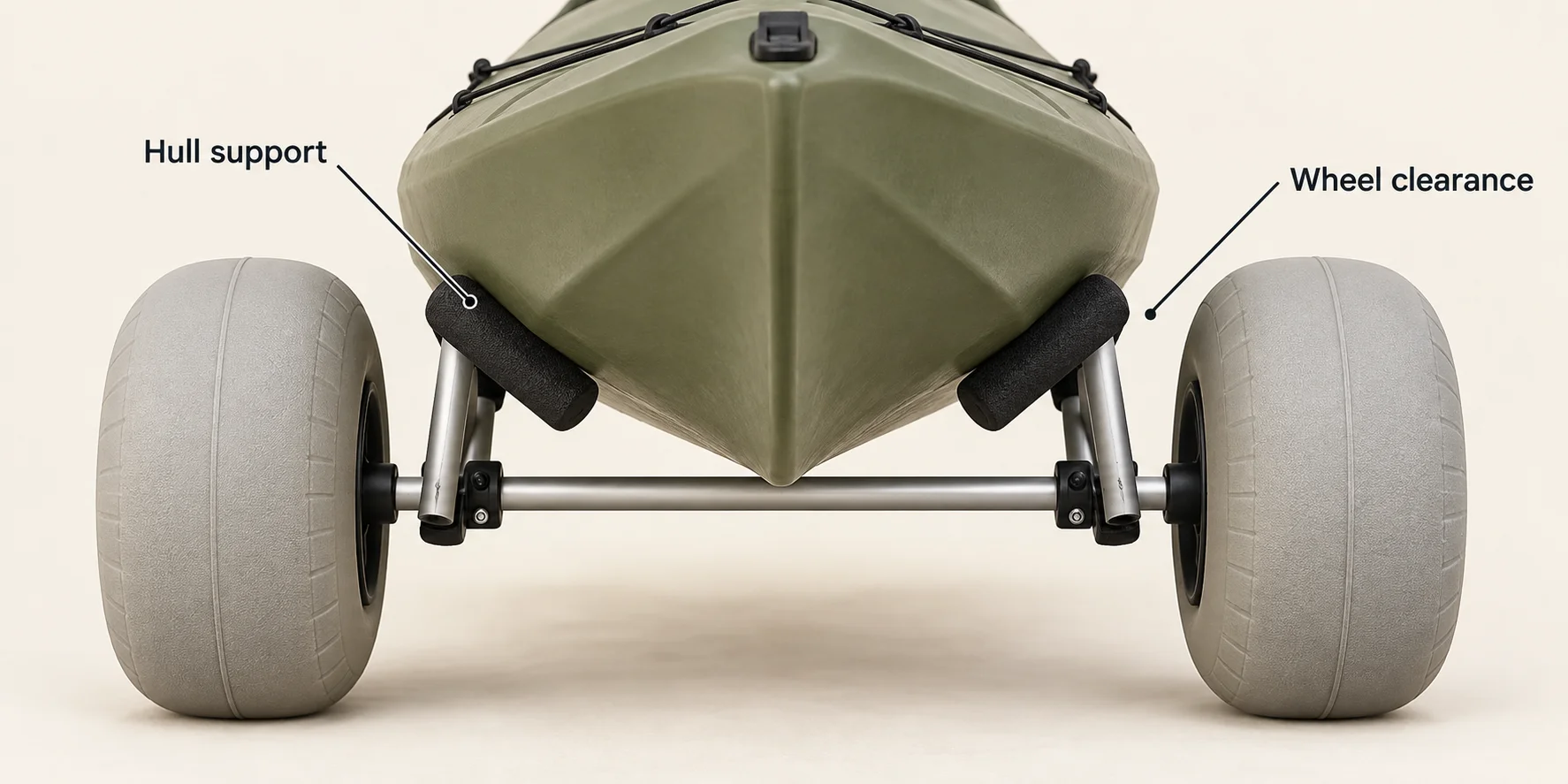
Before ordering, check where the bars will contact your kayak and whether the wheels will clear it. Adjustable support does not guarantee a fit. If carrying the cart aboard matters, obtain measurements of the disassembled parts rather than treating the product page’s dimensions as a packed size.
Suspenz Catch-All Universal Beach
Why consider it: Support bars that can be repositioned and turned crosswise or lengthwise.
Main tradeoff: Suspenz’s published load information conflicts.
The Catch-All Beach offers another approach when hull shape makes support placement awkward. Its rotating bar arrangement is worth comparing with your boat’s underside. Suspenz describes its beach wheels as suitable for both soft and packed sand.
The load discrepancy matters: the current product page lists 240 lb, while the linked 22-9910 manual says 300 lb. Confirm the applicable beach-wheel limit before buying, especially for a loaded fishing kayak. Do not assume the higher figure applies.
The manual also calls for at least half an inch of wheel clearance. Check that after choosing the bar position. Suspenz lists disassembled storage dimensions of 33 × 11 × 11 inches, so measure your available storage space before planning to take it aboard.
Its wheel sizing needs context, too. The specification table says 13 inches, the box contents say 12, and the replacement-wheel page describes an inflated diameter of 12–13 inches. Treat the size as nominal rather than an exact clearance measurement.
C-Tug R with SandTrakz Wheels
Why consider it: Puncture-free wheels and a lighter cart to handle.
Main tradeoff: Its static rating does not tell you what load it can transport across your beach.
The C-Tug R SandTrakz uses wheels that compress under load. RAILBLAZA describes this as creating a longer contact area. That makes it an alternative worth considering if you prefer airless wheels, though it does not establish that it pulls more easily than a balloon-wheel cart.
The R version uses adjustable hull rails. Check the manufacturer’s fit guide carefully: Native Slayer and Old Town Sportsman PDL 106/120 are excluded. Several Hobie models are listed as compatible, but an unlisted boat should not be assumed to fit.
The US listing was out of stock when checked. Confirm availability and suitability for your actual transported load before making this your purchase plan.
What changes between soft sand and packed sand?
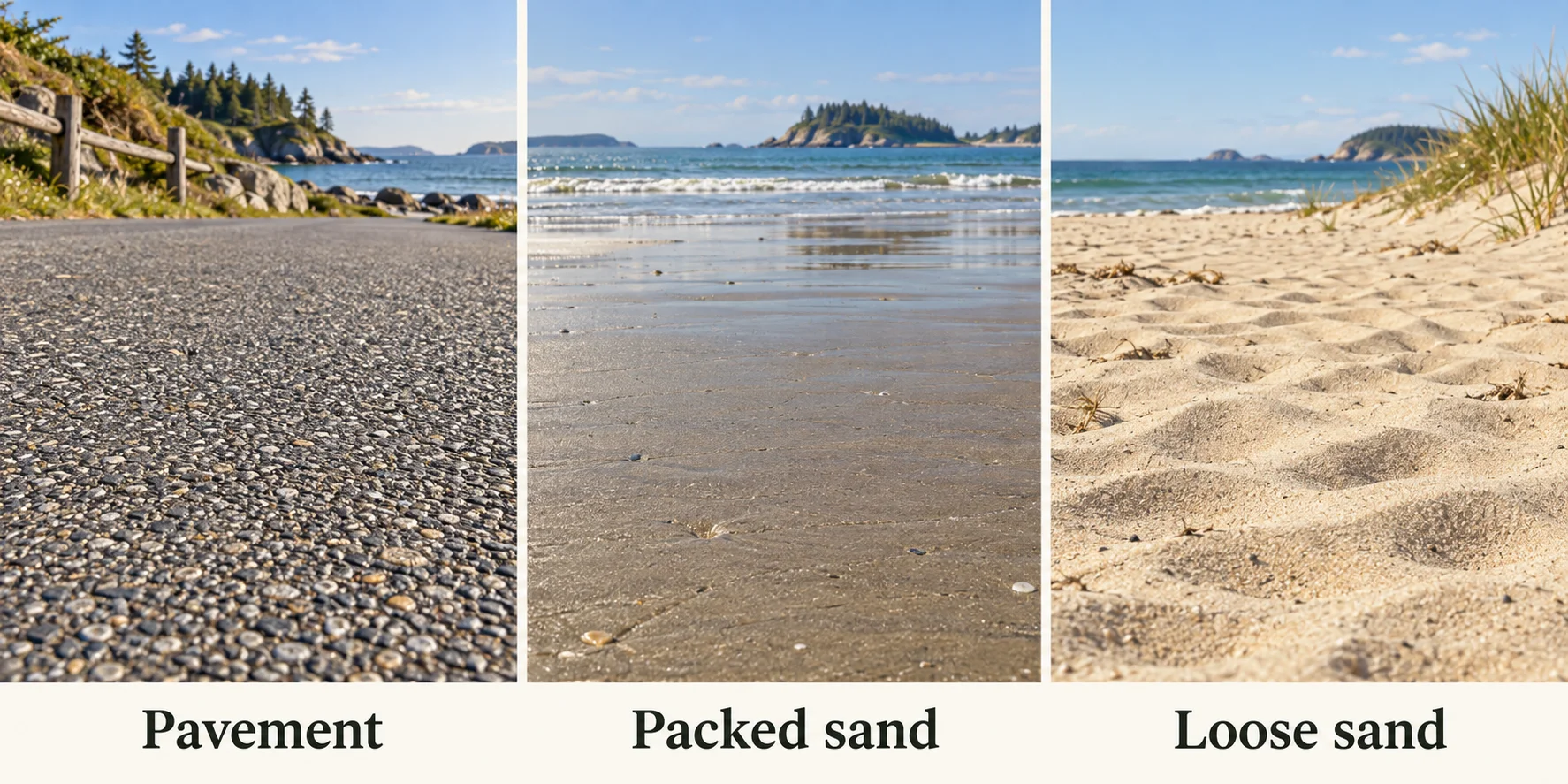
Start with the stretch that concerns you most. A firm beach approach and a long crossing of loose sand are different buying situations, even if both end at the same water.
Suspenz’s terrain guidance illustrates the distinction: it includes packed sand among the uses for its airless tires, while its beach wheels also cover soft sand. If your existing cart already works on the firm route you use, a beach-wheel purchase may be unnecessary. If loose sand is the reason you’re replacing it, put that requirement near the top of your comparison.
Also consider what comes before the beach. Note any gravel, uneven ground or pavement, and compare those surfaces with the wheel maker’s guidance. A sand label alone does not answer every part of the trip.
Check the load, hull and storage together
Count the kayak and everything that stays aboard during transport. That may include the drive, battery, seat, tackle and other fitted gear. Compare that total with the exact cart configuration’s stated load basis.
The distinction is especially important here: Wilderness describes a transport load, Suspenz publishes conflicting figures, and C-Tug R lists a static load. Those numbers cannot be used as a simple ranking of sand performance.
Next, check the support points and wheel clearance against your boat. Finally, decide whether the cart will return to the vehicle or travel aboard. The kayak cart selection guide covers those fit and storage checks in more detail.
Common questions about beach carts
Can I just add beach wheels to my current cart?
Only use a conversion supported for your exact frame and axle. Check the resulting load rating as well as wheel clearance. The wheel diameter alone does not establish compatibility, and a rating for the original wheels may not apply after conversion.
What tire pressure should I use?
Follow the instructions for the exact wheels supplied. There is no single pressure recommendation established for all the carts here. Check the wheel markings and current manual before inflating rather than borrowing a setting from another cart.
Is the highest-capacity cart the easiest to pull?
A load rating does not establish pulling effort. Hull fit, the load you carry and the route still matter, and these manufacturer specifications do not provide a controlled pulling comparison.
Which cart makes sense for your beach launch?
For a heavier fishing kayak on sand, begin with the Wilderness beach configuration and verify its support fit. The Suspenz is worth investigating for its adaptable bar arrangement, with its load discrepancy resolved before purchase. C-Tug R offers an airless alternative when the hull, load and availability checks work out.
Before buying, write down your transported weight, the surfaces on your route and where the cart needs to fit aboard. If sand is only a small part of the decision, compare the broader kayak cart options as well.